


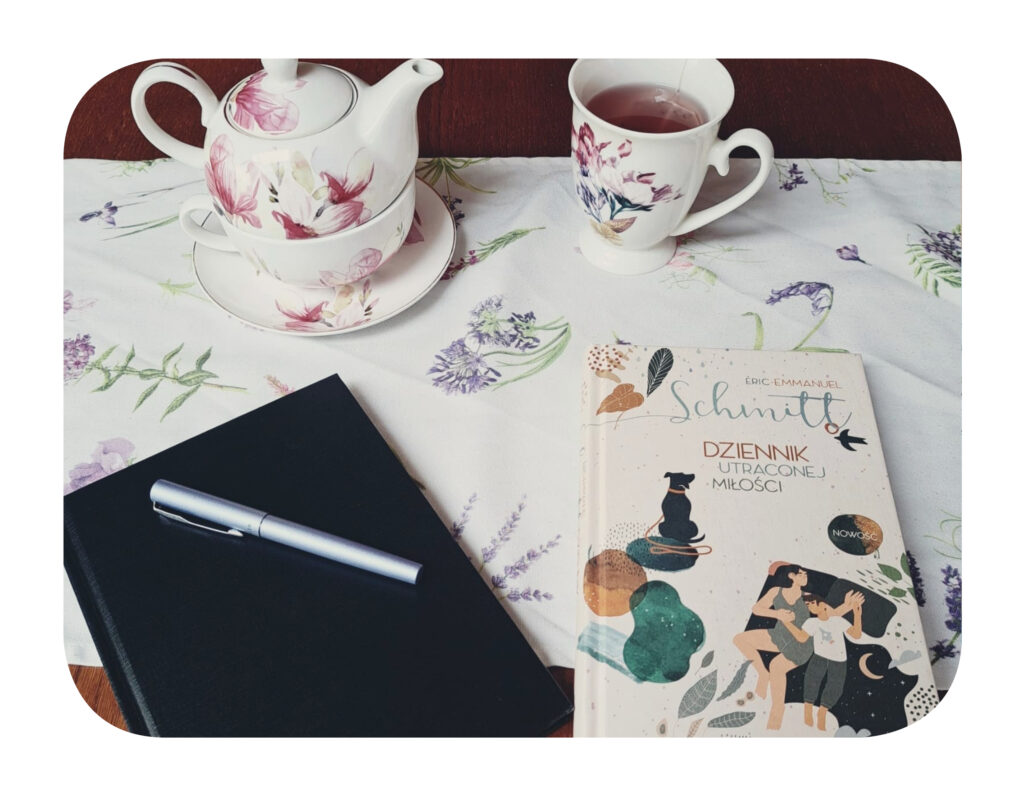
„Dziennik utraconej miłości” Erica Emmanuela Schmitta ─ intymny dziennik żałoby, osobista podróż od rozpaczy do nadziei
„Dziennik utraconej miłości” to w dużej części osobista relacja pisarza z przeżywanej przez niego żałoby po śmierci ukochanej matki. Doświadczenie straty stanowi niejako rusztowanie, do którego autor przymocowuje zarówno wspomnienia jak i bieżące wydarzenia z życia jego rodziny. Śmierć matki uruchamia lawinę trudnych emocji, z którymi pisarz musi się zmierzyć. Co więcej, staje się ona początkiem drogi do wyjaśnienia kwestii, które od zawsze były dla pisarza tajemnicą. Na kartach książki życie przeplata się ze śmiercią, a rozpacz z nadzieją. Nade wszystko jednak bije z niej ciepło czułej, pięknej miłości matki do syna i syna do matki, miłości silniejszej niż śmierć.
Warto przeczytać „Dziennik utraconej miłości”, bo to jedna z tych pozycji, które oswajają śmierć, przypominają, że jest ona zjawiskiem naturalnym i nieuniknionym. Uświadamia też, że żałobę trzeba przeżyć, a nie przed nią uciekać, by móc w pełni wrócić do życia.
CYTAT: „Śmierć nie zadziera z przeszłością, zabija teraźniejszość i przyszłość. Mimo swej potęgi śmierć nie uśmierca niczego, co wczorajsze, wspomnienia pozostają nietknięte.”
‘‘The Diary of Lost Love’ by Eric Emmanuel Schmitt ─ an intimate diary of mourning, a personal journey from dispair to hope.
‘The Diary of Lost Love’ is in its greatest part the writer’s personal relation of the process of mourning he experienced after his beloved mother’s death. The experience of loss constitutes as if a scaffolding to which the author attaches both various memories and the current events from his family’s life. His mother’s death starts an avalanche of difficult emotions which the writer has to deal with. Moreover, it becomes the beginning of a route to explain the issues which had always been a secret to the writer. On the pages of the book, life is intertwined with death and the dispair with hope. Above all, what comes from it is the warmth of beautiful, sensitive mother’s love towards her son and the son’s love to his mother, love that is stronger than death.
It is worth reading ‘The Diary of Lost Love’ since it is one of the works that familiarize death as well as remind us that it is a natural and inevitable phenomenon. The book makes the reader realize that grief has to be dealt with instead of being avoided, in order to fully return to life.
QUOTE: ‘Death does not mess with the past, it kills the present and the future. Despite itspower death does not slay anything that belongs to yesterday, memories remain untouched.’

„Ślady” Jakuba Małeckiego ─ przesycona widmem umierania plątanina ludzkich losów
„Ślady” to zbiór opowiadań Jakuba Małeckiego, który przypomina trochę rozbite lustro lub rozrzucone puzzle. Każde opowiadanie jest połączone z innymi jakąś postacią lub jej wspomnieniem. Wszystkie razem tworzą mozaikę, ale nie całość, ponieważ wiele pytań, które nasuwają się w trakcie lektury, pozostaje bez odpowiedzi. „Ślady” to także różne oblicza śmierci, która zawsze odciska mocne piętno na ludziach żyjących. Jest to śmierć niespodziewana lub przeczuwana, czasem nagła, niekiedy wyczekiwana. Bywa przedstawiana jako obserwator, który poznaje swoją ‘ofiarę’, spersonalizowana, stająca się kolejnym bohaterem opowiadania, a nawet jego narratorem.
Małecki eksploruje różne oblicza umierania, próbując swoim wyjątkowym stylem opisać to, co tak naprawdę niewyrażalne. I co tak naprawdę ─ podobnie jak losy wielu bohaterów jego prozy ─ jest i pozostanie tajemnicą.
CYTAT: „Ludwik coraz częściej ma również wrażenie, że ktoś na niego czeka, choć nie wie, kto miałby to być. (…) Coraz częściej śni mu się, że ktoś go obejmuje, a on umiera w uścisku mocnych ramion.”
‘Traces’ by Jakub Małecki ─ rife with the spectre of death tangle of human fates
‘Traces’ is a collection of short stories by Jakub Małecki which reminds me of a broken mirror or a dissembled jigsaw puzzle. Each story is connected with the others through a certain figure or his/her memory. Alltogether, the stories form a mosaic, but not a whole since numerous questions that arise in the process of reading remain unanswered. ‘Traces’ is also about various faces of death, which always takes its toll on the living. Death may be unexpected or sensed, sometimes sudden, at other times long-awaited. It happens to be depicted as an observer who gets to know its ‘victim’, personalised, becoming another character of a story, or even its narrator.
Małecki explores various faces of the process of passing away. Using his exceptional style, he attempts to describe the inexpressible as well as what, similarly to many of his characters’ fates, is and will remain a mystery.
QUOTE: ‘More and more often, Ludwik has also an impression that somebody is waiting for him, although he doesn’t know who that might be. (…) More and more often he dreams about somebody embracing him and about him dying in an embrace of strong arms.’

Chcesz uczyć się angielskiego jeszcze więcej? Wskakuj do naszego mailingowego salonu językowego.